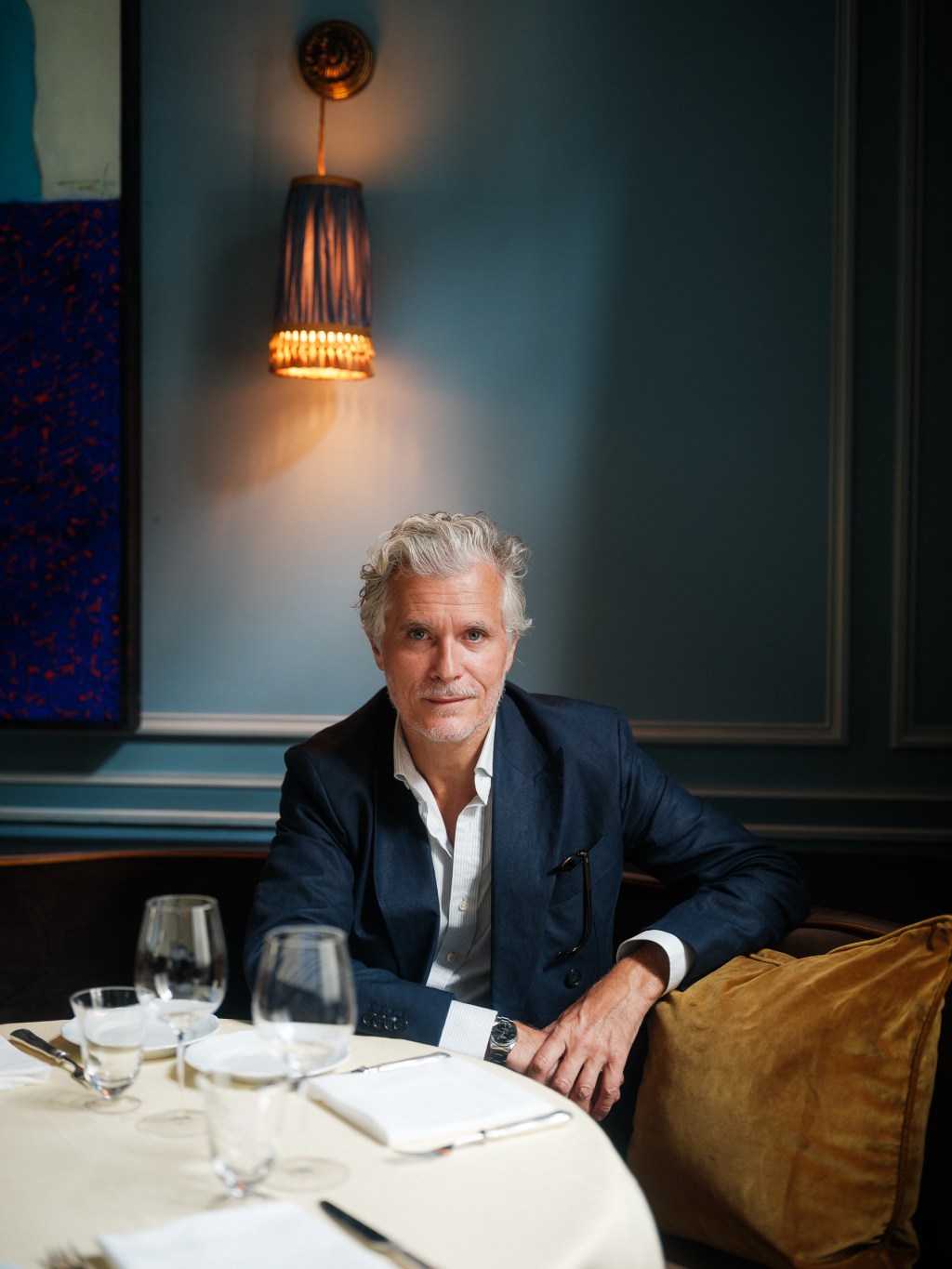
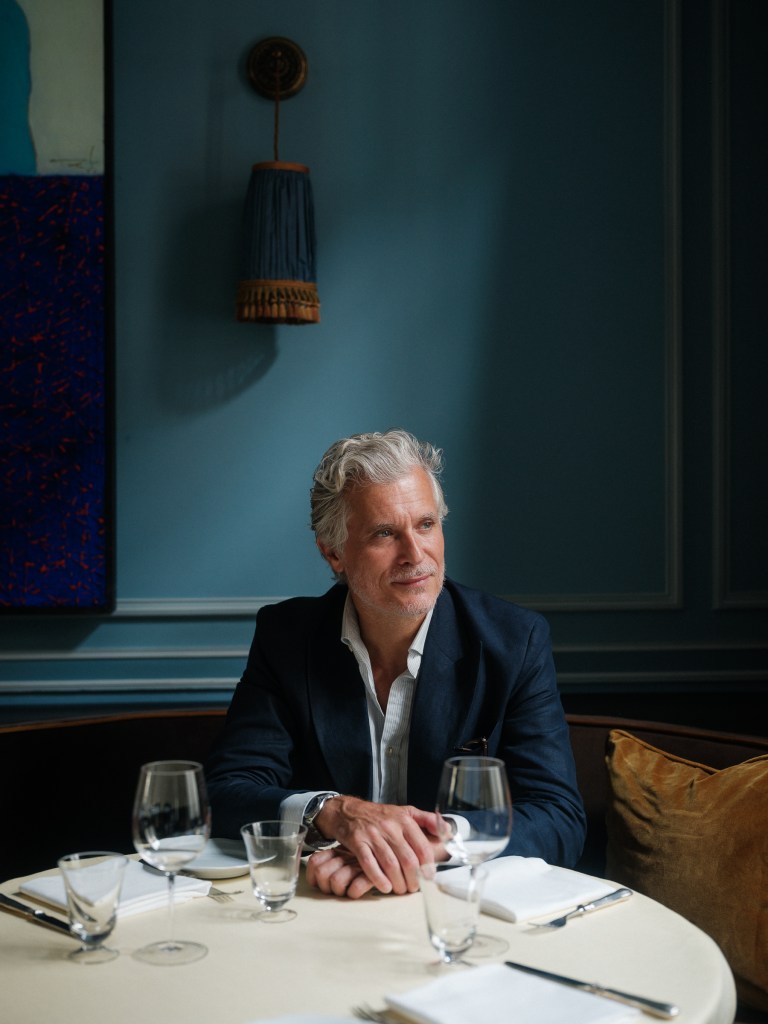
Guillaume Glipa has shaped some of the most talked-about rooms in New York and London, from Chiltern Firehouse to Annabel’s, and now oversees Café 22 at The Twenty Two in Mayfair.
1. Café 22 has just relaunched as a Parisian café. Why classic French cooking, and why now?
Food is like fashion, it’s a circle, and it comes back. Think of classic cocktails. Why are they usually better than any new creation? Because they just hit the spot, that’s why I will always love a Negroni or a Martini. French cooking has been there for centuries, it’s comforting, it’s tasty and it’s good for the soul.
There is a real rebirth of the French restaurant in New York, Paris restaurant scene is booming, and in London places like Joséphine, Maison François, Chez Rose and Bouchon Racine are doing brilliantly.
One of the owners loves going to Paris, to his favourite bistros, and one day he said, “I love the ambiance, the simplicity, the quality of the food. Let’s do our Parisian café.” I said, “Okay, boom, I’m in.”
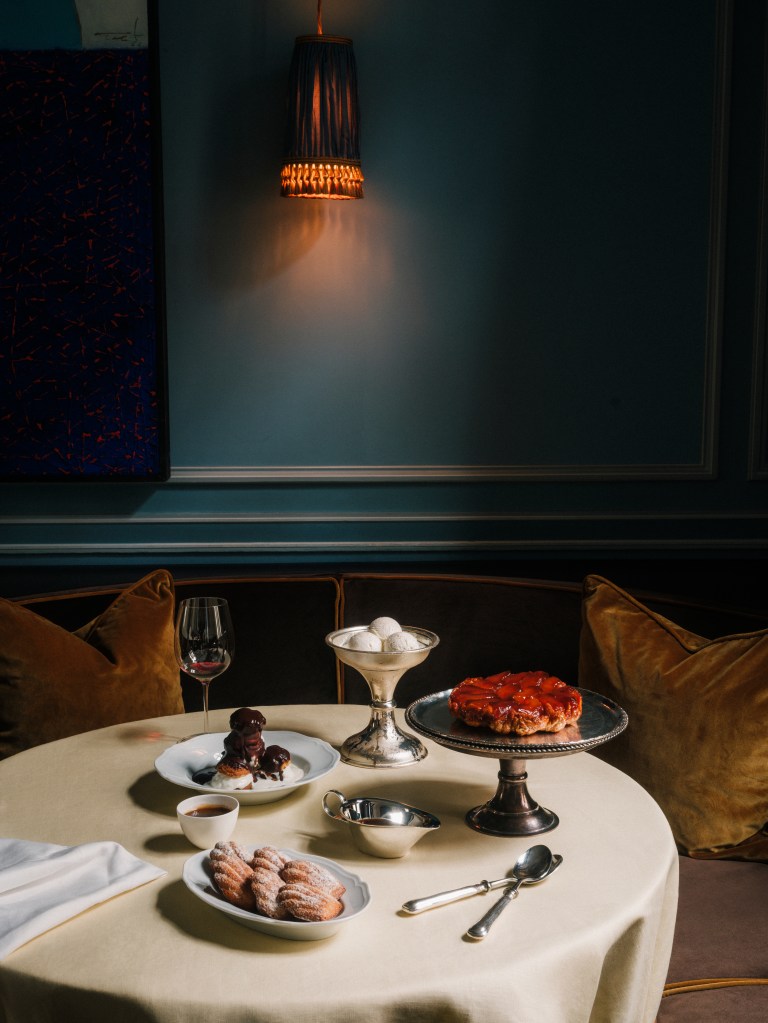
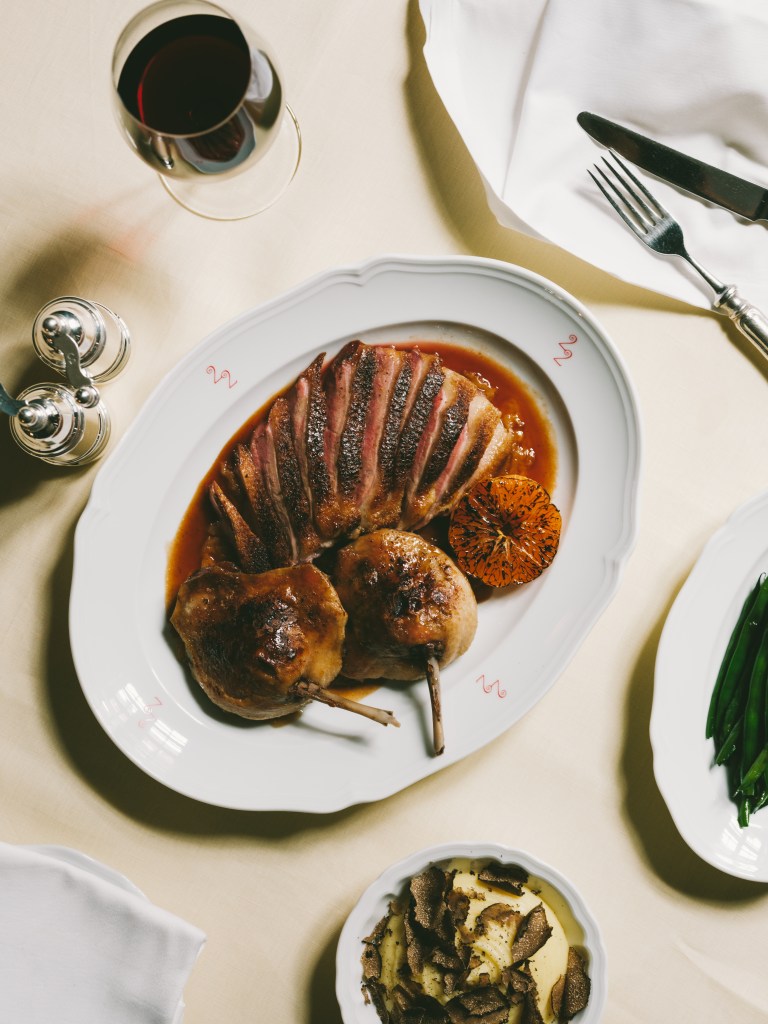
We made trips to Paris together with our super talented chef, Alan Christie, who is classically trained and loves French culture. The menu is simple, but everything is done at a very high level, steak tartare, endive salad with blue cheese, pear and walnut, canard à l’orange, filet au poivre, Dover sole meunière, gratin dauphinois, oysters. Then tarte tatin, profiteroles with warm chocolate sauce, and warm madeleines with a little caramel. Simplicity, with outstanding taste.
2. The room has been completely reworked. How do you create that buzz?
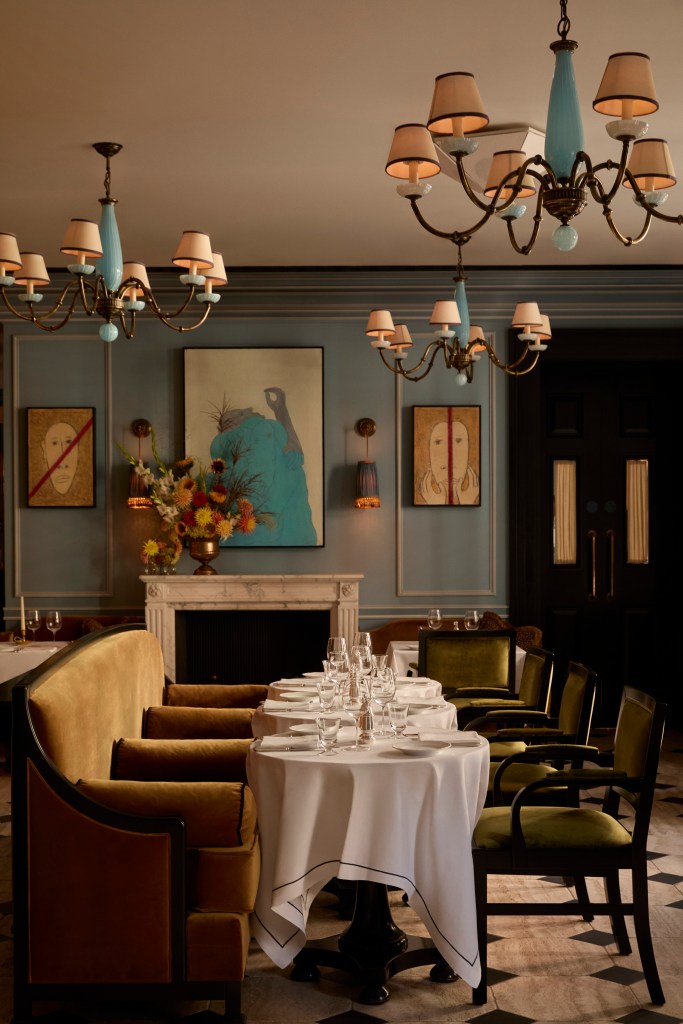
It was a beautiful room, but we wanted it lighter. Before, it was big armchairs, a bit stuffy. Navid Mirtorabi, who founded The Twenty-Two, designed new chairs that are very light and elegant, and they helped changing the whole atmosphere.
We put the tables closer together and added booths, so people have to get up to let someone out. That creates a flow, an energy, a bit of chaos, and chaos can create buzz. We keep the doors open between the two rooms, so the energy isn’t stopped by a wall, and at night you can see the candles in the other room. We also brought in the lighting designers I worked with at Chiltern Firehouse and Louie, and the people behind the music at Chiltern Firehouse and Hôtel Costes.
3. Alongside Café 22, you work with the Reuben Brothers on Cambridge House and Waldorf Astoria London Admiralty Arch. What does that role involve?
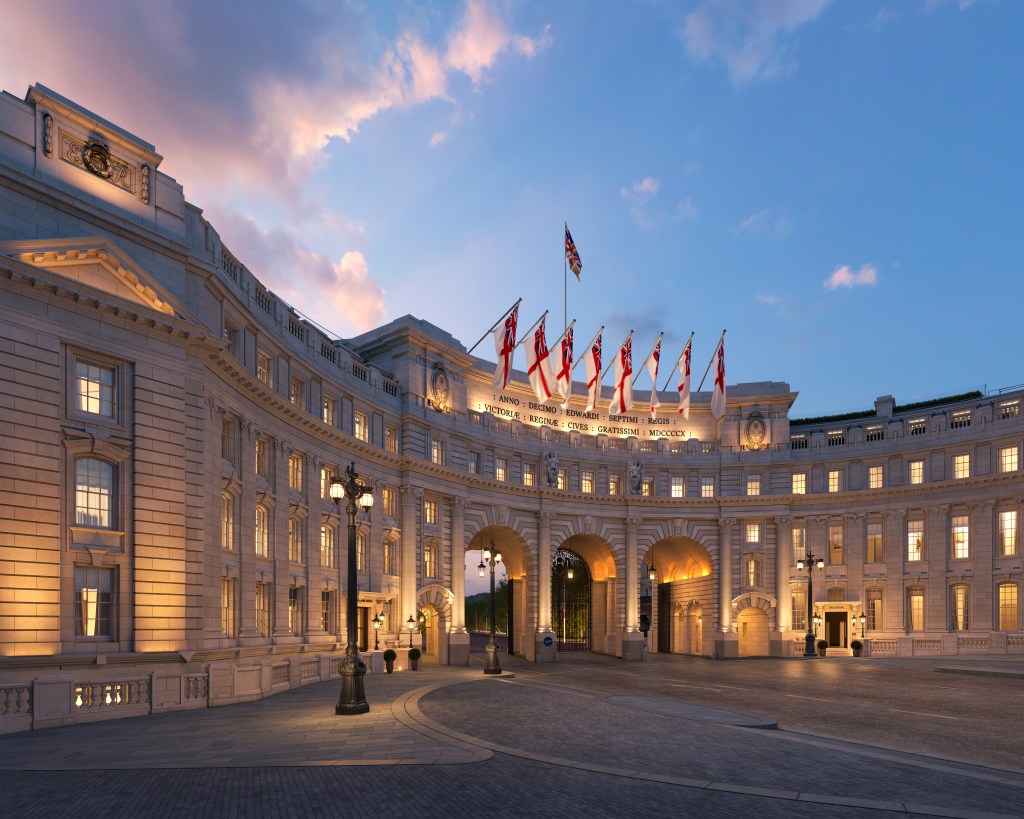
I’m lucky to work with a family that is very creative and has the means for that creativity. Cambridge House on Piccadilly will be operated by Auberge, with a restaurant inspired by The Grill in New York. At Admiralty Arch, we are opening with Clare Smyth and Daniel Boulud, with a stunning terrace looking down The Mall towards Buckingham Palace.
At The Twenty Two, we operate the rooms and all the food and drink. On these projects we have partners, so my role is more diplomatic, representing the owner and sharing my experience after 30 years in the industry, nine in New York and 22 in London. I’m working with professionals, some of whom have more experience than I do, so I’m not there to tell anyone what to do. But I can share what I know of the London market, what people like to eat, pricing, positioning and help creating atmosphere.
4. You’ve opened many restaurants. What is the hardest part?
Lots of people think it’s just about good food and good wine. It isn’t. Opening a restaurant is like producing a film. You need great actors, a great cook, a great menu, great produce. Then recruitment, the design, the furniture. Are the tables the right height for the chairs? It’s every detail, but the team is the essence.
Then, like a film, there is the edit menu engineering and refining, and it’s never ready on time. You’re waiting for the lighting, the mirrors haven’t arrived. Then comes the promotion, the marketing. When everyone is talking about a new film with De Niro or Brad Pitt, your expectations are very high, and a new restaurant in Mayfair is the same. There is a big investment, and you have to deliver, so it’s stressful, but it’s positive stress. It keeps you alive, and it gives you a bit more grey hair.
5. You’ve lived through 22 years of London hospitality. How do you see the city today?
I’ve been back to New York five times in the past year, and New York is booming. People go out and spend $200 a head without blinking. You don’t find a glass of champagne for less than $35. In London, you can have two glasses for £35. It’s not the same market.
Paris, which was behind London for a while, is now ahead for restaurants. London is struggling. It will bounce back, but it would help greatly when we accept later licences and a few more tables on the pavement, and when people come back into the centre of town during the week.
6. What are your favourite hotels?
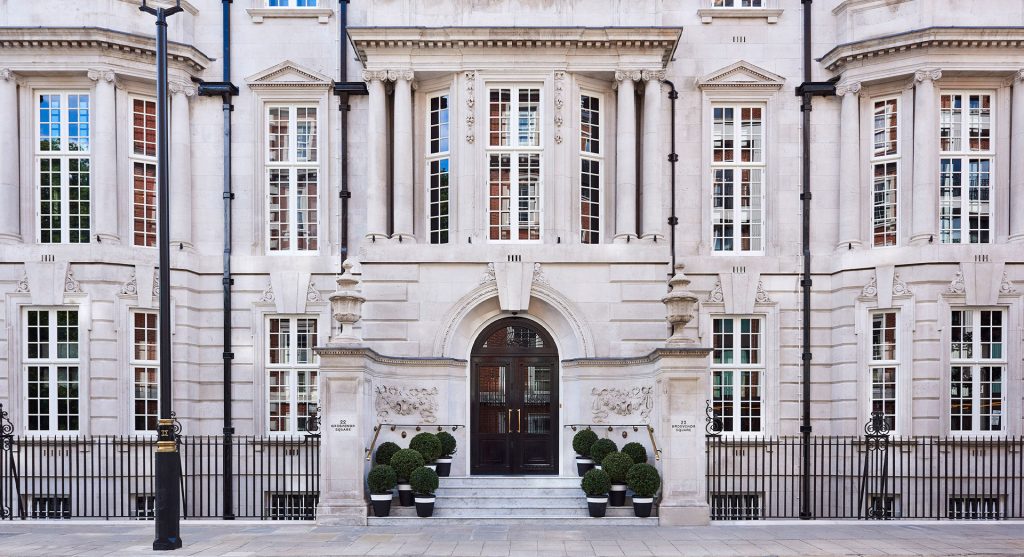
Of course, The Twenty-Two London & NYC! They both have the same DNA but with completely different style. London is more eccentric in its design and quite British and NYC is very sleek and intemporal. La Palma in Capri is a Jewel too, and I am lucky as it is as well in our portfolio.
Le Sirenuse in Positano. It’s the beauty of where it is, but also every corner, every detail, the ceramics, the tiles, the ice buckets, the sun beds all in wood, flowers and plants everywhere, the staff in immaculate white jackets. The food, the bed linen, the embossed towels, the view of the Li Galli islands, and the family who owns it. I love the family.
In hotels, we have a morning meeting before guests arrive, with photos printed, so the manager can greet you by name. At Le Sirenuse, it wasn’t just the manager, someone from housekeeping, greeted me by name, and it was my very first visit. I was blown away.
But in life you need choice, so I’d also say Chiltern Firehouse. It’s sentimental, because I helped open it, but everything there has been thought through. The chair is placed so you can reach the phone without moving it. André Balazs slept in every single room to make sure everything worked. So many beautiful hotels, even with renowned designers, have something that doesn’t work. At Chiltern Firehouse, every detail works.
7. And your favourite restaurant?
That’s like asking my favourite film or my favourite actor. There are ten, minimum. What makes a restaurant stand out is the food, of course, but also how people make you feel when you walk in. Then it depends on the mood, lunch with a friend, or somewhere a bit sexy and glamorous with a date. When it ticks every box, with beautiful lighting, comfort, and nice ceramics, then the experience will be wonderful.
I love Indochine in New York, with the same menu and the same decor since 1984. Basquiat, Keith Haring, Julian Schnabel were patrons, Calvin Klein, Kate Moss and Christy Turlington used to go Sundays. A great mix of locals, celebrities and tourists.
I recently discovered Tuba Club in Marseille, where you eat on the rocks facing the sea. It’s pure happiness. In London, I love Blanchette in Soho, a classic French bistro run by two brothers while the third does the music. It’s as close as you can get to being in Paris, and I love Peckham Bazaar.
8. Which restaurant first made you fall in love with hospitality?
Not one restaurant, it started with my grandmother. Everybody talks about their grandmother, it’s almost a caricature, but it’s the truth. She was an exceptional cook, and every vegetable came from her garden. Today everyone says “seasonal”. At my grandmother’s, there were simply no tomatoes in winter.
Every meal began with soup, even in summer. My grandparents came from a rural background, working in the vines, and my grandfather, from the south of France, would do “ chabrot”, pour a little red wine into the last spoonfuls of soup and drink it from the bowl. My grandfather picked his own porcini and caught frogs in the wild. They never bought porcini in their lives. In the vineyards there were 100-year-old white peach trees with tiny trunks. You’d peel a peach and put it in a little chilled white wine in summer, simple.
My favourite dish of all is a big farm chicken that has run around all its life, roasted and stuffed with stale bread, lots of garlic and the liver. All the juice soaks into the bread, and you serve it with porcini on the side. What made me fall in love was the produce.
9. What are you reading at the moment?
There is always time to read. When I don’t have time, I read poetry, because you can just open it and only read a few lines. I try to read a poem every morning before work, in French, English or Spanish, Pablo Neruda in the original and then in French, or Paul Éluard, E. E. Cummings, Arthur Rimbaud, Charles Bukowski. I always have a poetry book in my handbag. It’s protection for your soul. Inspiration, soul and the key to freedom, that’s poetry.
I’ve just finished Bel-Ami by Guy de Maupassant. I first read it at school at fifteen, and came back to it because Keith McNally, one of the best restaurateurs in the world, named it among his favourite books. It paints society over a century ago, and nothing has changed, people manoeuvring and climbing on others’ backs to get higher. It’s scary, but it’s beautiful literature, with a great sense of humour.
10. Which films have inspired you, in hospitality and design?
I don’t watch television, but I’m a member of the BFI and the Prince Charles Cinema in Soho, where they show the classics. I raised my children watching classic cinema. My favourite directors are Visconti, Antonioni, Fellini and Ettore Scola, then Godard, Truffaut, Melville and Chabrol, Hitchckock and Kubric. In those films there is life, restaurants, beautiful clothes, cars, time taken over a close-up.
The director who influenced me most is Claude Sautet. Most of his films happen in restaurants and cafés, and it’s so natural. Friends on a Sunday afternoon at a country house, roasting a lamb, slicing it around the table, talking politics. Those films shaped my aesthetic, and my life.
For anyone who loves food, watch Babette’s Feast, and La Grande Bouffe, Marco Ferreri’s 1973 cult film, once in your lifetime. But above all, The Taste of Things, with Juliette Binoche and Benoît Magimel. I’ve watched it three or four times. They cook on an open fire, with copper pans and lots of butter.

