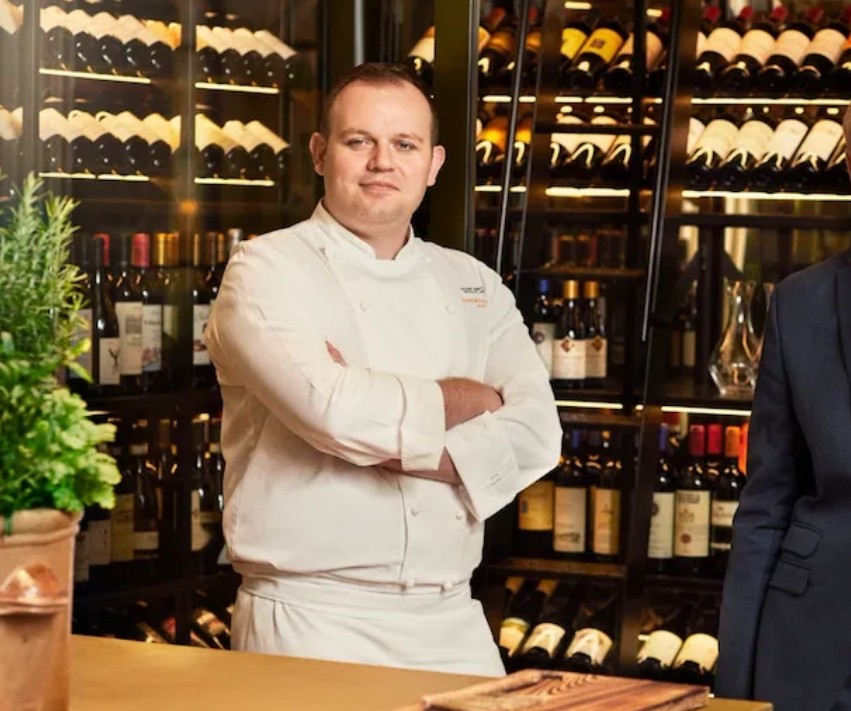
Stepping into Woven at Coworth Park is to enter a world shaped by one man’s instinct for atmosphere, emotion and craft. Chef Adam Smith has long been recognised as one of Britain’s most thoughtful culinary voices, a chef whose philosophy blends precision with warmth, and whose definition of luxury is rooted not in formality, but in feeling.
In this exclusive conversation with The Luxe Resident, Adam reflects on the evolution of Woven, what modern hospitality truly means, and the journey that shaped him from a young apprentice at The Ritz into one of the country’s most respected chefs. What emerges is a portrait of a man moved by people, by product, by memory, and above all, by the desire to create an experience that lingers long after the final bite.
This year has been an exciting one for Woven. How would you describe the journey so far?
“One of the key things about enjoying the experience of a restaurant is the vibe, the feeling, having the atmosphere that’s busy and bustling, you still want great food and attentive service, but I think when you have an atmosphere, it makes you want to return.”
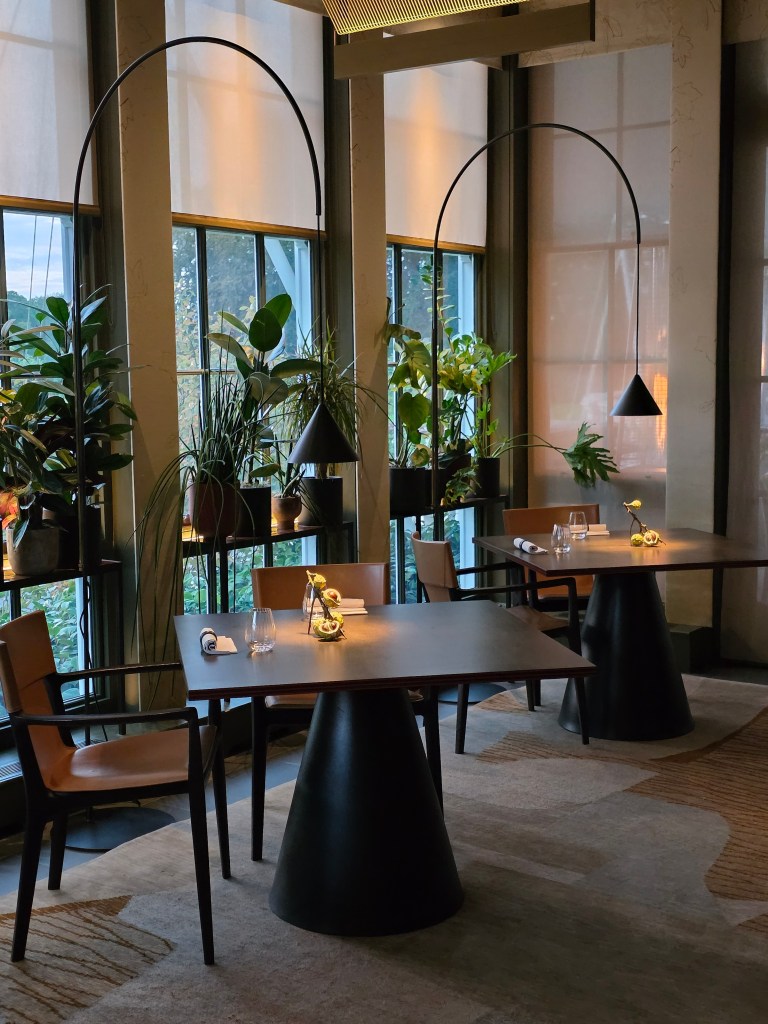
“When we put Woven together many of the ideas were about things that I have experienced, amazing restaurants that have had amazing food. I think in a property like this that is an impressive and beautiful property, it can be easy to become a little bit stuffy and pretentious, and actually I wanted to take all that away and make people feel comfortable and really enjoy themselves, like really old-fashioned hospitality where it’s about welcoming people and looking after them, and wanting them to have great food and a great experience.”
“You want an atmosphere that’s buzzing and that’s totally different and that’s what I wanted to create.”
From your perspective, what is the most powerful ingredient in a restaurant’s success?
“The strongest thing you can have is that word of mouth, having people talking about it. In the modern world there are so many ways of people putting themselves out there, but I don’t think you can ever get away from just making sure the guests that are with you during that time have a great moment in time and most of them will go away and hopefully that builds and your word spreads.”

Fine dining has evolved dramatically over the decades. How do you see the shift from the past to the present?
“In years gone by, particularly more formal dining experiences like us, worry about how shiny the silver is or how starchy your waiter’s jacket is, but in the modern world it’s all about the relationships, it’s about how you make your guests feel, it’s giving them something that’s unique to you.”
“In the modern world it’s all about the relationships, about how you make your guests feel, it’s giving them something that’s unique to you. Our food style is not unique in terms of flavour combinations, we’re not rewriting the rule book but it’s unique in the products we are using, because a lot of it is unique to the relationships I have, whether it be from the estate here or from the farmers and producers that I’ve worked with over the years and how we bring that to together. And the people are unique, like the front of house team, in how they interact with guests.”

How would you define modern luxury in hospitality today?
“Luxury is not so much about how starchy your tablecloth is, or how shiny your cutlery is but its about how you make people feel. Value is a massive thing, when we talk about value as a team, it’s not about money, money doesn’t come into that, value isn’t about the price of your meal, value is about how you make people feel. I’ve personally been out for dinners and spent an extortionate amount of money and not questioned it because I’ve had an amazing time, it’s blown my mind in how its made me feel, but I’ve also been out for dinner and have spent fifty-quid and felt like I had been fleeced because it felt transactional, expectation plays into that, the value of what you’re going there for.”
What brings you joy in your role as a chef?
“The best part of my job is the two P’s, the people and the products. The right products coming through the door and the right people to process it. The people side of things is ever growing and ever more important.”
“As a real youngster I fell in love with the camaraderie in the kitchen, the teamwork, the buzz and the atmosphere. There’s nothing more than pleasing other people.”
“As a real youngster I fell in love with and had an ambition of going into hospitality and wanted to do something around that. I fell in love with the camaraderie in the kitchen, the teamwork, the buzz and the atmosphere, the people side of it. There’s nothing more than pleasing other people. As a chef, I feel it’s so important to make other people happy, with what you’re doing, whether that’s roasting a chicken on a Monday for my kids at home or for someone that has saved up for years to come here for a special anniversary, you want to make those guests happy.”
“The hospitality industry is all about people, your internal or external guests.”
You began incredibly young. When did your career in hospitality truly start?
“I got my first part-time job when I was thirteen. By the time I was fifteen I already had a clear vision in my mind that this is what I wanted to do.”
“I moved to London at 16 on my own, I had no fear at that point, I thought this is what I want to do and I’m going to do it. I got an opportunity at the Ritz and stayed there for 10 years. I then spent three years in North Yorkshire, and then I ended up here and I think Woven is the perfect blend of the two.”
“You work far too hard and far too long not to enjoy what you’re doing every day.”
Woven has a clear identity. How did its concept take shape?
“As a cook and as a chef you get to a point where you mature, and you’re like this is me, this is my niche, this is where I want to go.”
“I spent ten years at the Ritz, I loved my time there, I learnt so much but when I decided I was going to move on I wanted to do my own thing and you go through a period of trying to recreate things you’ve done before because it’s what you know, and then you go through this evolution of trying things that are new and experimental and maybe you’ve been influenced too much by things around you, but then you get to a point where you mature, and you’re like this is me, this is my niche, this is where I want to go.”
“We now have that confidence with Woven and we’ve evolved into creating our own style and making it unique. It’s now experiential, making things that are memorable.”
“It was already successful and a bigger restaurant but I wasn’t getting that fulfilment. I didn’t have the confidence to go out there and say this is what I want to do. We now have that confidence with Woven and we’ve evolved into creating our own style and making it unique. Previously, no one was wowed and that’s been the biggest change, its now experiential, making things that are memorable, and guests come back.”
“The concept of Woven has come from weaving together all my experiences, whether that’s my travelling, friends, family all woven together. A restaurant with a personality. Our British produce is world class, particularly cheese and dairy. We have thirty-two cheeses at Woven. Some of the best cheeses in the world are from the UK.”
“Hospitality is that energy, that you get in the room, that you make people feel comfortable to interact with each other and with the team.”
Which dishes feel most personal to you on the current menu?
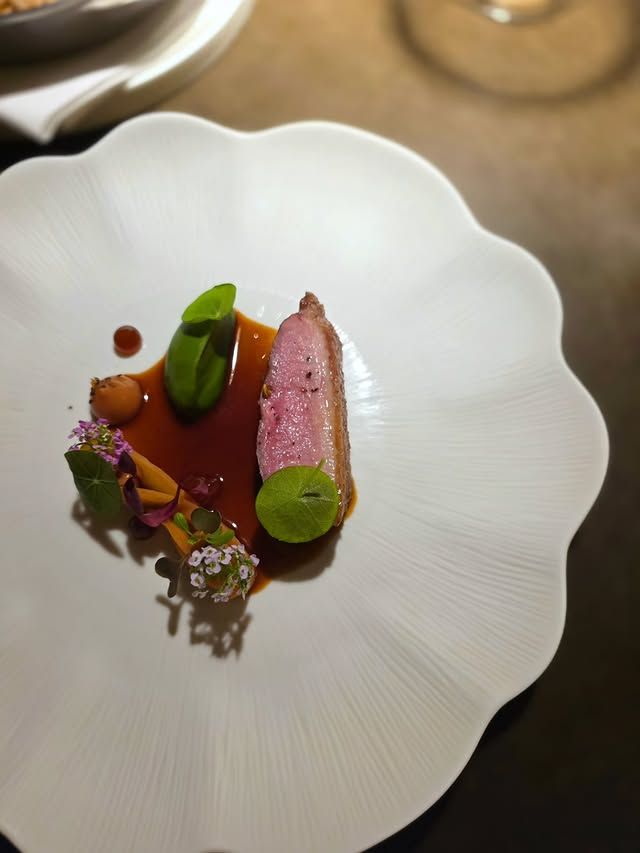
“Jellied eel and the turbot dish is an homage to my roots and old school cooking. The turbot is a statement dish that’s very delicious and opulent, it has turbot, lobster, caviar and truffle. Working at the Ritz I’ve grown to acquire expensive taste.”
The AA Awards was a milestone moment. What did it represent?
“I had always aspired to do this. We had to make a statement and represent ourselves. One of the most fulfilling things I’ve done in my career. We took a very organised approach and went for something a bit different. The team done an amazing job and bought an amazing energy to it. We had some of the best chefs in the country sending message saying that the food was amazing and that the dessert was one of the best desserts they had ever had.”
“Having Raymond Blanc come into the kitchen praising the food was great.”
Finally, what does cooking mean to you at its core?
“Cooking is not about recipes, it drives me mad when people say follow the recipes because I know you can give the same recipe and the same process to ten people and you’re going to get ten different dishes. There will be a similarity somewhere, but they are all going to be different.”
“Cooking’s about a touch, a feel, a sense. You work far too hard and far too long not to enjoy what you’re doing every day.”
Adam Smith’s vision for Woven is built not on ceremony or spectacle, but on something far more enduring, connection. His food is thoughtful, grounded in memory, shaped by relationships and elevated by instinct. The room hums with energy, the service feels human, and the experience lingers with a quiet confidence that is unmistakably his.
Woven is not merely a restaurant, it is the sum of every place, person and moment that shaped the chef behind it. And in that weaving, Adam Smith has created not just a dining room, but a feeling.
@coworthpark @chefadamsmith
Blacknest Road, Sunningdale, Ascot, SL5 7SE
 The Luxe Resident